Asset Onboarding
Turn any crypto holder into your user — they deposit from their chain, your app gets what it needs
Deposit Address

BTC
Bitcoin

USDC
Your App
bc1q...4mxp
Send from any wallet · Non-custodial
NEAR Intents
Asset Onboarding
Turn any crypto holder into your user — they deposit from their chain, your app gets what it needs
31
chains
100+
assets
~30s
settlement
1 day
to integrate
How It Works
User picks what they hold
Your deposit UI shows a chain and token selector. The user picks what they already hold — BTC on Bitcoin, ETH on Ethereum, SOL on Solana, or any of 100+ assets across 31 chains. Your app configures the destination token it needs to receive. The user never has to think about your chain.
Examples
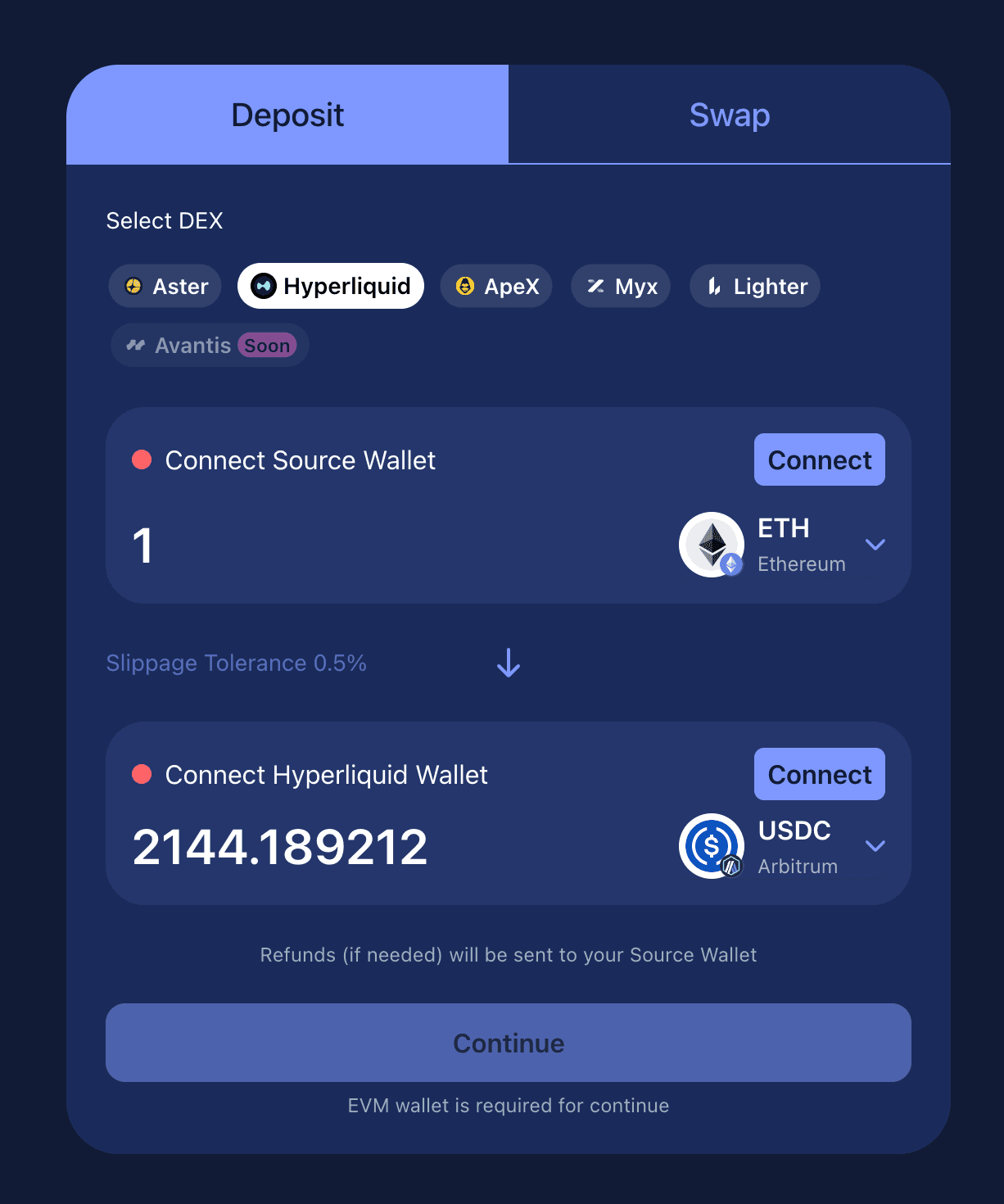
dep.now
Deposit any asset into Hyperliquid perps — 1 ETH from Ethereum becomes 2,144 USDC on Arbitrum
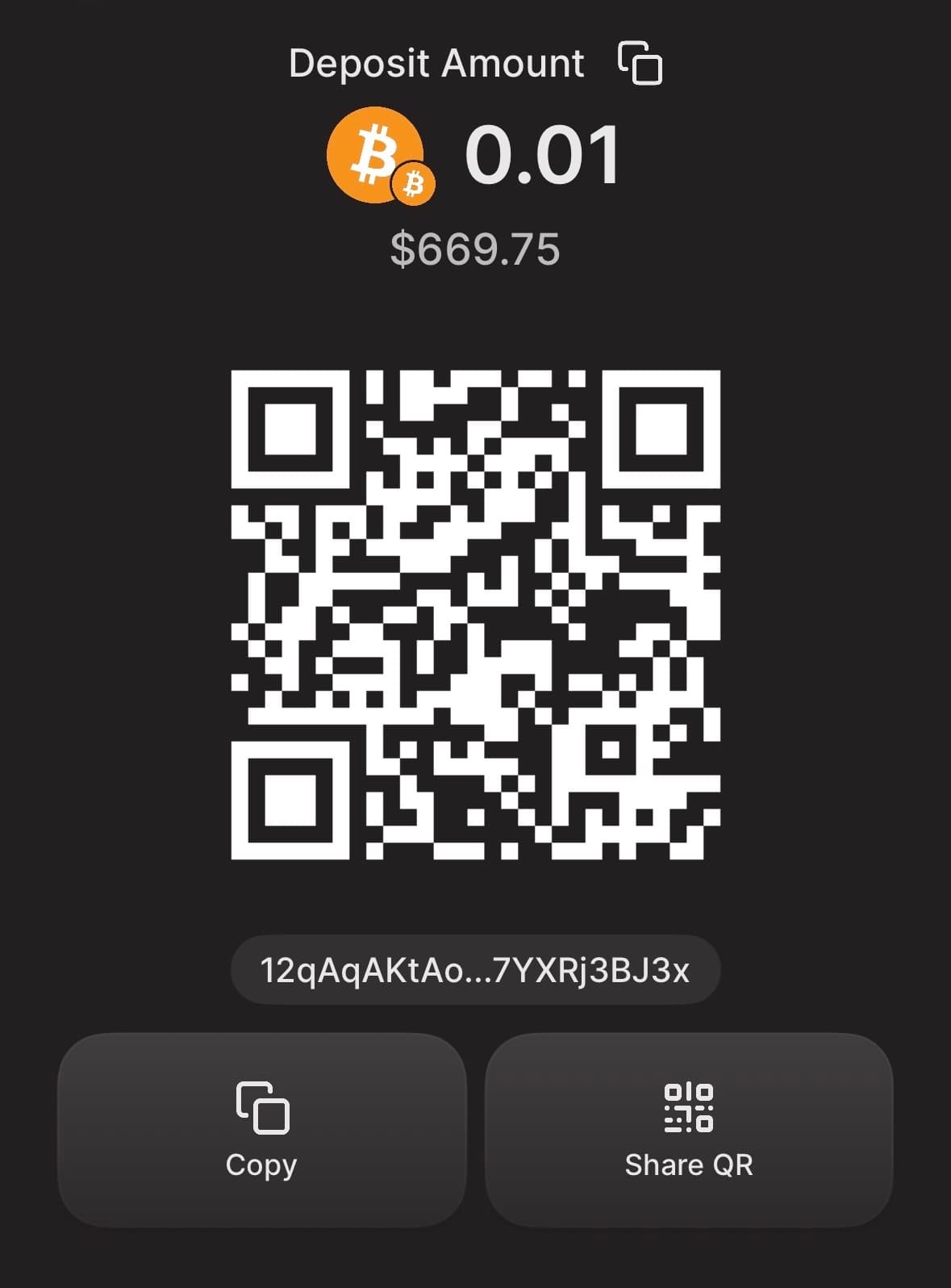
ZODL
Send Bitcoin and receive ZEC in your ZODL wallet
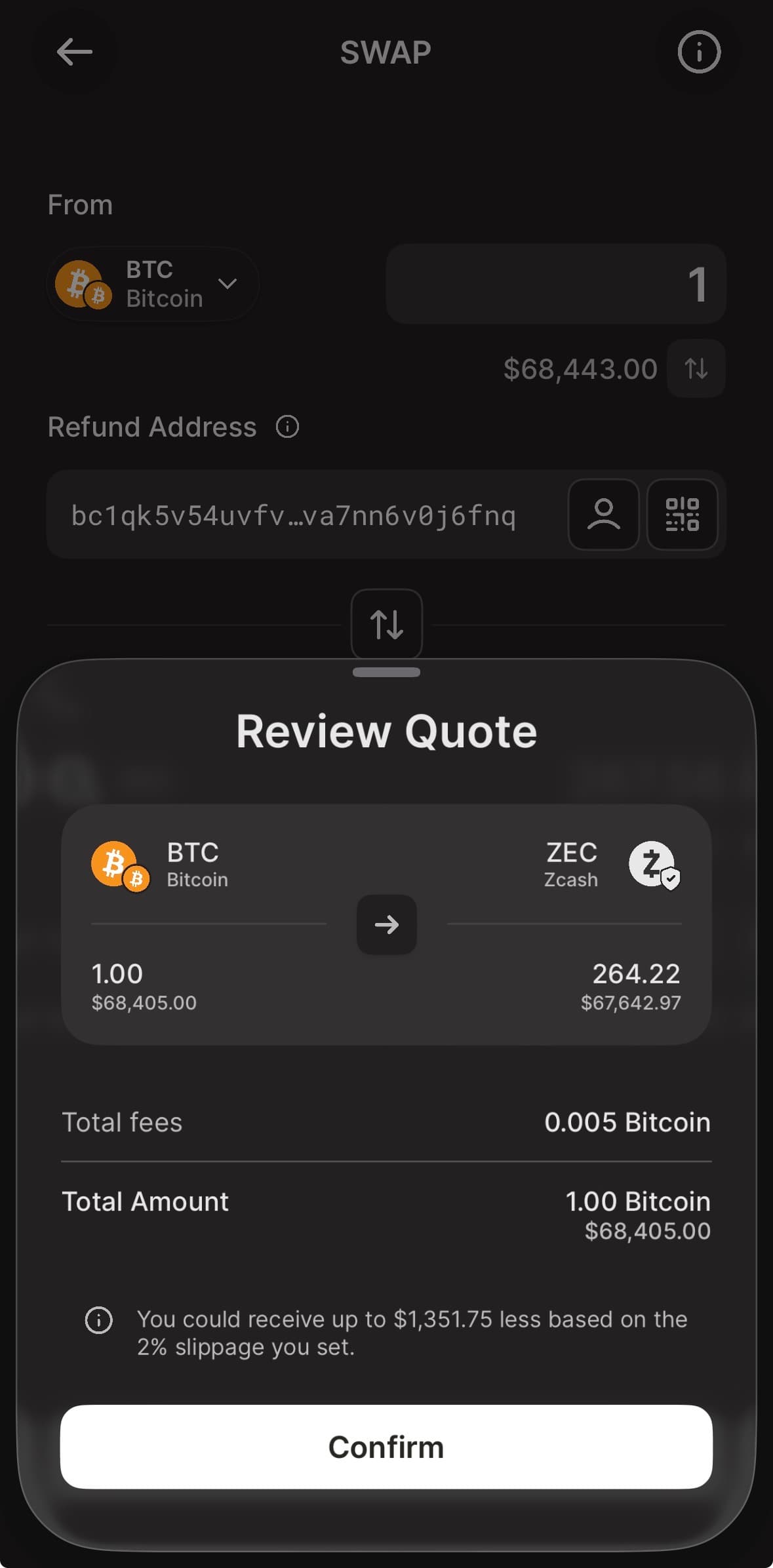
ZODL
Selecting a source asset to deposit into ZODL — send ETH from Ethereum, receive ZEC in the app
User Stories
Using A lending protocol on Base
- 1Opens the lending app → clicks 'Deposit Collateral'
- 2Sees 'Bitcoin (BTC)' in the source chain selector
- 3Selects amount — app previews cbBTC equivalent on Base
- 4Sends BTC to a generated deposit address (no Base wallet needed)
- 5cbBTC appears as collateral in their lending position in ~30s
Without NEAR Intents
Send BTC to a CEX, convert to cbBTC, bridge to Base, deposit into lending protocol. 4 steps, 15-30 min, ~3% in fees.
Using A DeFi app on Starknet
- 1Opens a Starknet DeFi app → clicks 'Deposit'
- 2Selects 'ETH on Ethereum' as source
- 3Previews: 0.5 ETH → ETH on Starknet
- 4Signs one Ethereum transaction
- 5ETH arrives on Starknet ready to use — user never touched a bridge
Without NEAR Intents
Find the Starknet bridge, understand the process, wait for L1→L2 finality, then manually deposit into the DeFi app. Many users give up before completing.
Using A perps exchange on Arbitrum
- 1Opens perps exchange → clicks 'Fund Account'
- 2Selects 'SOL on Solana' from the chain selector
- 3NEAR Intents previews: 10 SOL → USDC on Arbitrum
- 4Signs one Solana transaction
- 5USDC appears in their margin account — position opened immediately
Without NEAR Intents
Bridge SOL to Arbitrum via a cross-chain bridge, swap to USDC on an Arbitrum DEX, then deposit. Three separate steps across two apps.
Using ZODL
- 1Opens ZODL → taps Deposit
- 2Selects 'ETH on Ethereum' as source
- 3App previews: 0.5 ETH → receives ZEC in ZODL
- 4Signs one Ethereum transaction
- 5ZEC appears in ZODL wallet in ~30 seconds — ready to use
Without NEAR Intents
Find a CEX that supports both ETH and ZEC, complete KYC, deposit ETH, trade to ZEC, withdraw to ZODL. ~30 min and ~3% in fees.
Case Studies

ZODL
livePrivacy-first Zcash wallet that uses NEAR Intents to give users cross-chain access to 31 chains and 100+ assets — without leaving the app.
Solana
liveSolana joined the NEAR Intents network via Omnibridge, connecting its ecosystem to 30 other chains. ZEC, STRK, and NEAR tokens have been bridged to Solana — with more assets coming.
near.com
liveThe official NEAR Protocol website ships cross-chain swaps directly — letting anyone trade BTC, ETH, SOL, and 100+ assets from a single browser tab, powered by NEAR Intents.
Revenue Model
Fee Structure
Configurable fee per deposit — typically 20 to 100 basis points. Fees are fully customizable per route, so you can set lower fees for like-to-like deposits and higher fees for cross-asset or cross-chain deposits. You keep the fees you configure.
Ready to add asset onboarding to your product?
Integrate cross-chain capabilities in as little as 1 day with the NEAR Intents widget, or 1 week via API.
